

Route 66: Celebrating an Iconic American Road by Rail
Route 66 can be experienced in more ways than one. For travellers celebrating the road's centennial in 2026, Railbookers offers two ways to explore this iconic American journey: a 14-day holiday from Chicago to Los Angeles all on the train, or a 15-day itinerary that combines Amtrak travel with a self-drive segment. Both bring together classic American cities, rail travel, the Grand Canyon, and the enduring spirit of the Mother Road.
Why is Route 66 still so iconic?
Route 66 was established in 1926, connecting Chicago with Santa Monica across eight states: Illinois, Missouri, Kansas, Oklahoma, Texas, New Mexico, Arizona, and California. Although the original U.S. Highway 66 was removed from the federal highway system in 1985, its place in American culture has endured through historic communities, roadside businesses, museums, landmarks, and preserved sections of the original road.
Now, 100 years after the highway was established, the Route 66 centennial gives travellers a good reason to explore its history. You don't have to drive along all 2,000-plus miles of the historic highway to experience what makes Route 66 special. In fact, one of the most interesting ways to approach the centennial is to think beyond the road itself and consider the cities, landscapes, stories, and experiences that developed along its route.
That's where rail travel comes in.
While you can’t travel from end to end on a single train, rail can connect many of the major destinations associated with a Route 66 journey while allowing travellers to experience the American landscape from a different perspective.
What is the Route 66 by Rail itinerary?
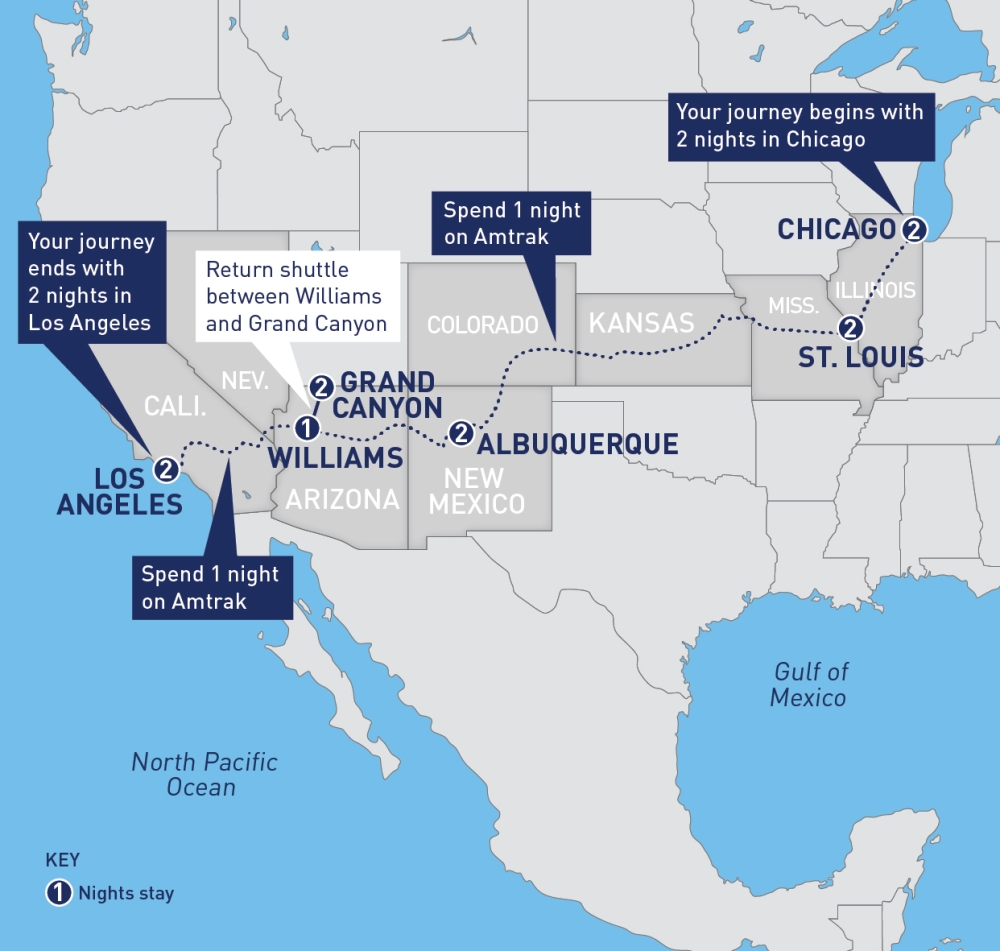
Railbookers’ Route 66 by Rail itinerary is designed for travellers who want to experience the journey primarily by train.
The 14-day holiday travels from Chicago to Los Angeles, combining Amtrak rail travel with hotel stays, sightseeing, and time to explore destinations along the way.
The itinerary includes time in:
- Chicago, the historic eastern starting point of Route 66.
- St. Louis, home to the Gateway Arch and an important stop between Chicago and the Southwest.
- Albuquerque, where travellers can experience the distinctive culture and landscapes of New Mexico.
- Williams, Arizona, a historic gateway to the Grand Canyon.
- Grand Canyon National Park.
- Los Angeles, at the western end of the journey.
The journey also incorporates the Grand Canyon Railway, adding a classic heritage rail experience to the long-distance Amtrak travel. The itinerary works well as an alternative to a traditional road trip, giving travellers time to settle into the journey, watch the scenery change, and arrive at each destination ready to explore.
Explore Route 66 by Rail with Railbookers
What is Route 66 by Rail and Road?
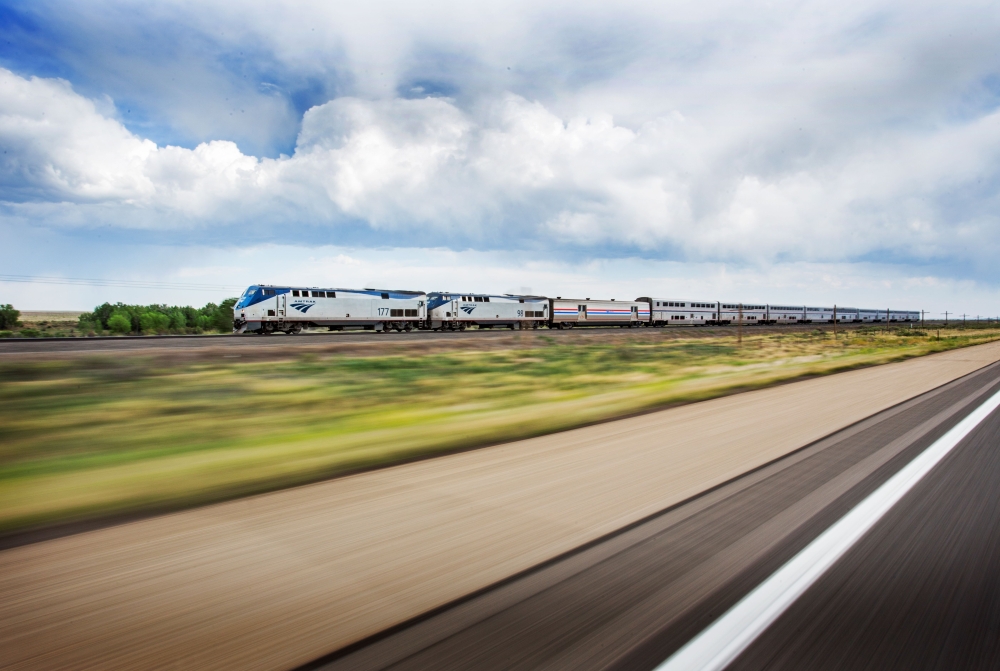
For travellers who want some of the benefits of rail but also want to get behind the wheel, Route 66 by Rail and Road takes a different approach.
This 15-day itinerary combines Amtrak rail travel with a self-drive segment through the Southwest, giving travellers the opportunity to experience both sides of an American journey.
That makes it a useful option for travellers who don't want to choose completely between a rail holiday and a road trip.
With rail handling part of the long-distance journey and a hire car providing flexibility during the self-drive portion, the itinerary can offer a different pace and perspective. The train is particularly useful for covering long distances without requiring someone in the group to spend hours driving, while the road portion allows travellers to explore at their own pace.
Explore Route 66 by Rail and Road with Railbookers
Which itinerary is right for you?
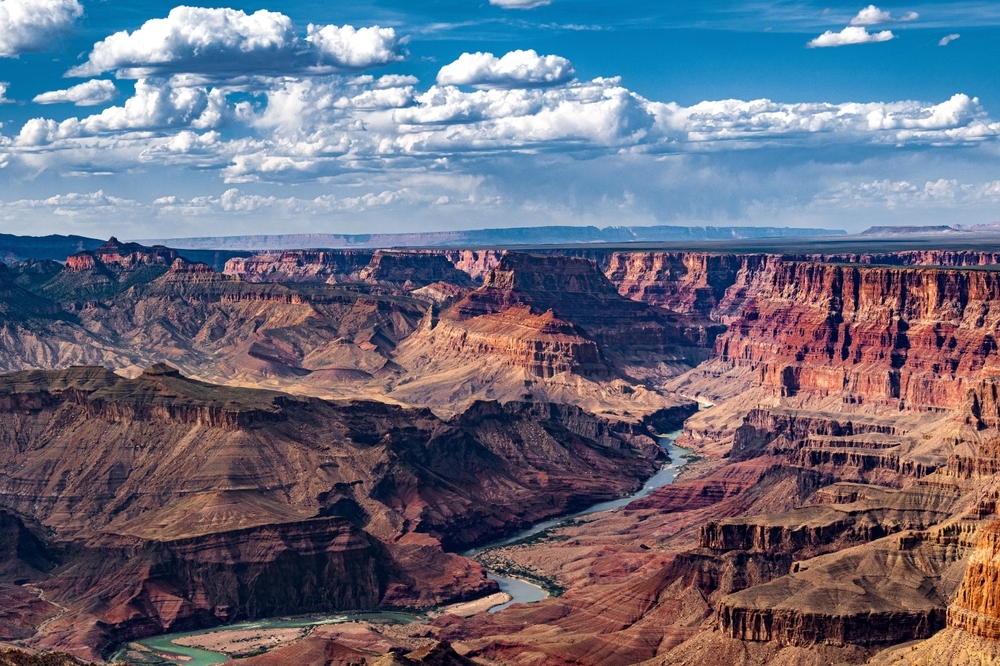
The biggest difference is straightforward: Route 66 by Rail is primarily a rail holiday, while Route 66 by Rail and Road combines rail with a self-drive experience.
| Feature | Route 66 by Rail | Route 66 by Rail and Road |
|---|---|---|
| Trip length | 14 days | 15 days |
| Travel style | Primarily rail | Rail and self-drive |
| Route | Chicago to Los Angeles | Route 66-inspired journey combining rail and road |
| Best suited to | Travellers who want to make the train part of the experience | Travellers who want both rail travel and the freedom of the road |
| Driving | No traditional self-drive component | Includes a Southwest self-drive segment |
| Grand Canyon experience | Included | Route and inclusions vary by itinerary |
| Overall approach | Let the journey unfold by rail | Combine the efficiency of rail with road-trip flexibility |
The right choice depends less on which format is "better" and more on how you want to travel.
Choose the rail itinerary if you like the idea of watching the landscape unfold from your train window, avoiding long driving days and making the train itself part of the holiday.
Choose the rail-and-road itinerary if you want more independence during part of the trip and enjoy having a car to explore the Southwest.
What can you see on a Route 66 rail holiday?
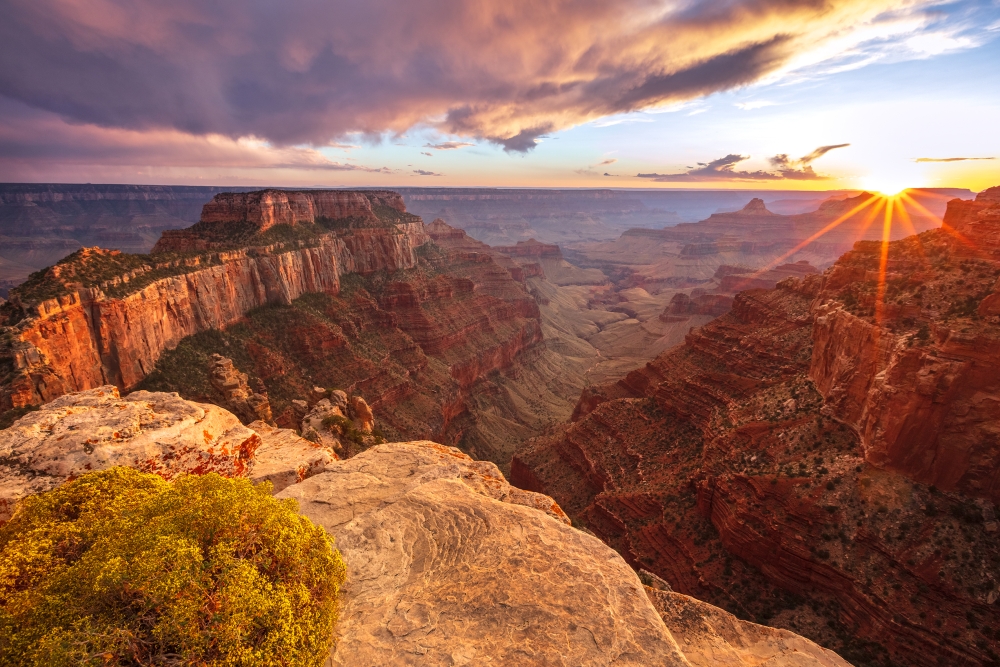
One of the biggest advantages of approaching Route 66 by rail is that the journey can encompass several distinctly different American experiences.
Chicago and St. Louis
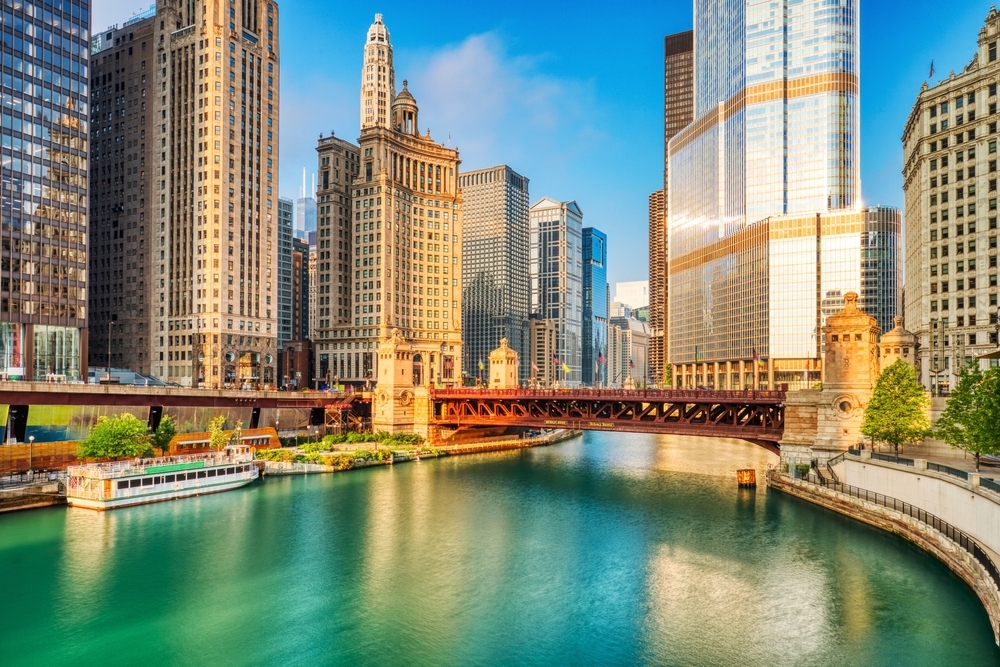
Both itineraries include Chicago, the historic eastern starting point of Route 66 and a natural place to begin a centennial journey. Chicago's architecture, museums, neighbourhoods, restaurants, and lakefront give travellers plenty to experience before the journey heads west. Railbookers' itinerary includes a hop-on, hop-off sightseeing experience, letting travellers see more of the city without having to arrange every sightseeing connection independently.
The journey continues towards St. Louis, whose most recognisable landmark is the Gateway Arch, which rises above the Mississippi River and serves as a fitting symbol for a journey heading west. For travellers interested in the history of American expansion, transport, and the changing relationship between cities and the open road, St. Louis adds another layer to the story.
Albuquerque, Williams, and the Grand Canyon
Further west, Albuquerque introduces a completely different landscape and cultural setting. The city provides a chance to experience New Mexico's Southwestern character, from its historic areas and architecture to its distinctive food and local traditions.
It's also an excellent reminder that Route 66 isn't simply a nostalgic collection of roadside signs. The communities along the route are living destinations with their own histories and identities.
In Arizona, the journey reaches Williams, a historic Route 66 community and gateway to the Grand Canyon. Here, the trip takes another memorable turn with the Grand Canyon Railway, which connects Williams with Grand Canyon National Park. Combining the historic highway story with a dedicated railway experience creates one of the most distinctive elements of the holiday.
Los Angeles
The journey concludes in Los Angeles, bringing travellers to the western end of the classic Route 66 story.
After spending time moving through the American Midwest and Southwest, arriving in Southern California provides a natural change of pace.
For travellers who want to extend their holiday, Los Angeles can also serve as the starting point for additional time in Southern California.
When is the best time to travel along Route 66?
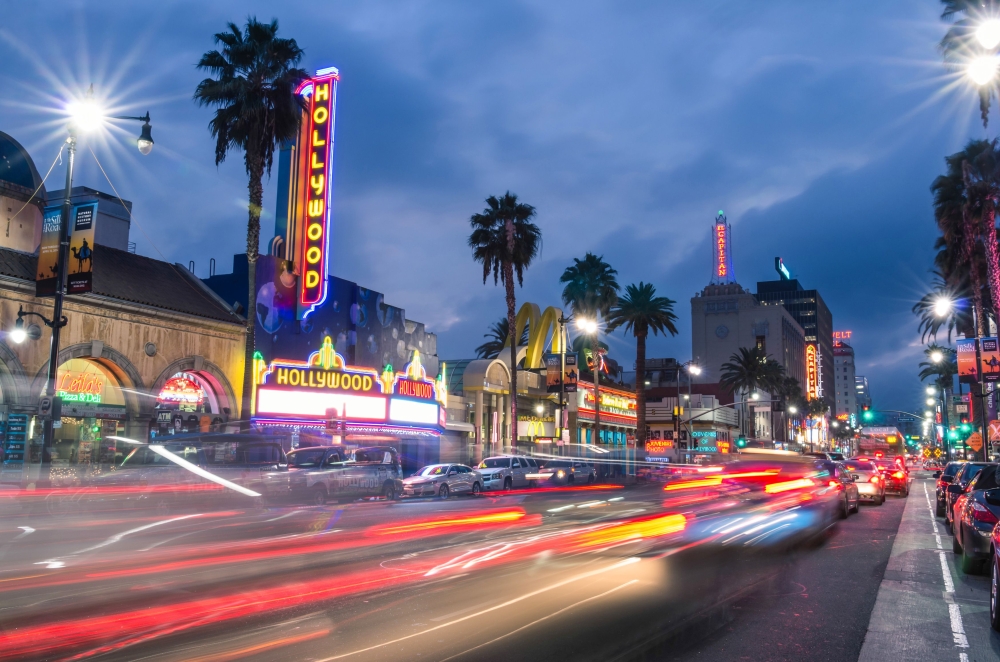
The best time to travel depends on which parts of the journey matter most to you.
Spring and autumn can be attractive for travellers who want to explore cities and outdoor destinations without planning the entire holiday around the hottest part of summer.
Summer can work well for travellers with fixed school or work schedules, although temperatures in parts of the Southwest can be very high.
Winter offers a different perspective, but travellers should consider seasonal conditions and operating schedules when planning specific activities.
For a centennial-focused trip in 2026, travellers should also consider how much time they want to devote to Route 66 events and celebrations. The centennial is being marked throughout the year by communities and organisations along the historic route.
Is Route 66 by rail a good option for international travellers?

Yes, especially for those who want to experience several recognisable American destinations in one trip. The trip combines major American cities, long-distance rail travel, the Southwest, and one of the country's most famous national parks.
For international travellers, Railbookers can also simplify the planning challenge of combining multiple American destinations without arranging every rail ticket, hotel, and sightseeing experience separately.
How can Railbookers help when planning a Route 66 holiday?

A successful Route 66 itinerary involves more than simply identifying stops on a map. Consider your preferred travel style, ideal pace, overnight stays, sightseeing priorities, and flexibility.
Railbookers handles complex logistics and planning, giving travellers the independence they want without having to stress about the small details. Our Route 66 itineraries allow for customisation, including options to add nights, travel in reverse, combine itineraries, or handpick elements such as hotels and sightseeing.
That can be particularly useful for a trip like Route 66, where travellers often have different ideas about what they want to see.
Rather than simply booking a train from Chicago to Los Angeles, the itinerary can be built around where to stop, the length of stay in each city, what to see, and how each part of the journey connects. It’s independent, too, unlike a traditional escorted tour, giving you the freedom to explore how you want.
Common Route 66 Planning Mistakes to Avoid
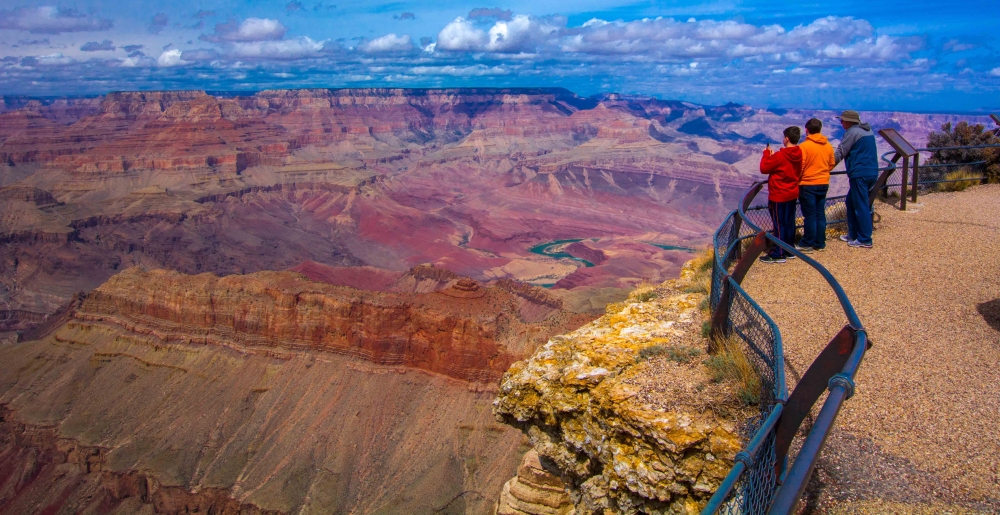
Route 66 is easy to romanticise, but planning it well requires a little practical thinking.
Avoid:
- Trying to see everything. The historic route covers eight states, so a comprehensive road journey requires considerably more time than a typical holiday.
- Treating the train as transport only. Long-distance rail is part of the experience.
- Overloading the itinerary. Too many one-night stops can leave little time to experience each destination.
- Assuming the historic road and modern transport routes are identical. They aren't.
- Forgetting to allow time for major attractions. The Grand Canyon, for example, deserves more than a quick photo stop.
- Choosing rail or road without considering your travel style. Railbookers offers two itineraries because different travellers want different balances of independence, driving, and rail travel.
Key Takeaways: Experience Route 66 Your Way

Route 66 has always been about movement: heading west, discovering somewhere new, and seeing what lies beyond the next horizon.
A century after the road was established, travellers don't have to experience that journey exactly as they did generations ago. The train offers another way to cross the country, combining the nostalgia of the Mother Road with the comfort and perspective of long-distance rail travel.
Whether you choose the primarily rail-based journey or combine rail with a self-drive adventure, the appeal is the same: you're not simply travelling between destinations. You're making the journey part of the experience.
Railbookers can coordinate the rail travel, hotels, sightseeing, and other elements of the itinerary, while giving travellers the freedom to explore independently along the way.
For the Route 66 centennial, that makes the journey itself worth celebrating.
Frequently Asked Questions About Route 66 by Rail
Can you travel along Route 66 by rail?
Yes, although no train follows the entire original Route 66 highway. Railbookers' Route 66 by Rail itinerary connects Chicago and Los Angeles by Amtrak while incorporating stops such as St. Louis, Albuquerque, and Williams, plus time at the Grand Canyon.
How many days is Route 66 by Rail?
Railbookers' Route 66 by Rail itinerary is 14 days from Chicago to Los Angeles. The itinerary combines long-distance Amtrak travel with hotel stays, sightseeing, and the Grand Canyon Railway.
Is there a Route 66 train?
There is not a dedicated train that follows the entire historic Route 66. Railbookers uses Amtrak routes and other rail experiences to create a Route 66-inspired journey connecting major destinations along the historic corridor.
Can you combine Route 66 with a road trip?
Yes. Railbookers' Route 66 by Rail and Road is a 15-day itinerary combining Amtrak rail travel with a self-drive segment in the Southwest.
Do the itineraries include the Grand Canyon?
Yes. Both itineraries include time at Grand Canyon National Park and travel on the Grand Canyon Railway.
Where does Route 66 start and end?
Historically, Route 66 connected Chicago, Illinois, with Santa Monica, California. Today, Chicago and Los Angeles are commonly used as the eastern and western endpoints for Route 66-themed travel experiences.
What states does Route 66 pass through?
The historic Route 66 passed through Illinois, Missouri, Kansas, Oklahoma, Texas, New Mexico, Arizona, and California.
Is Route 66 still a highway?
The original U.S. Highway 66 was officially removed from the federal highway system in 1985. However, many sections of the historic route remain accessible, and Route 66 continues to be commemorated through preserved road sections, historic sites, museums, and communities along the corridor.
Why travel along Route 66 by train instead of by car?
Travelling by train removes the need to drive long distances between major destinations and makes the journey itself part of the holiday. It can be particularly appealing to travellers who want to see the American landscape without spending the entire trip behind the wheel.


